To understand Italian art history, one must understand that it was never just about paint on a canvas; it was about a radical new way of seeing the world. A History of Art Course in Florence allows you to experience this transformation firsthand. When you walk through the streets of Italy, you are stepping into a narrative that spans millennia.
Imagine standing in the exact spot where Michelangelo and Leonardo once competed for the city’s grandest commissions, or where the Medici family shaped the Florence Renaissance. This is the magic of a Florence art education—the city itself is your primary source.
There are countless “hidden” stories in these masterpieces. For instance, did you know that the ultramarine blue in many Renaissance art courses’ favorite paintings was once more expensive than gold? Or that the hidden geometries in Florence’s architecture were inspired by the search for divine proportion?
And one more highlight: your classroom is the city itself—streets, museums, and churches, not traditional classrooms!
This article was published in 2019, and last updated in April 2026
Why Choose an Art History Course in Florence? The Birthplace of the Renaissance
Florence is a city that refuses to be just a museum; it is a living, breathing testament to human potential. The Florence Renaissance was a key moment in the shift toward new ways of thinking about art and humanity.
From the revolutionary perspective of Masaccio’s frescoes to the monumental scale of Brunelleschi’s Duomo, a History of Art Course in Florence provides a context that you simply cannot get from a screen. You aren’t just learning about “The Birth of Venus”—you are breathing the same Tuscan air that inspired Botticelli.
Our History of Art Course in Florence
Studiainitalia offers a specialized short Art History Course in Florence, consisting of 10 one-to-one lessons over one week. We focus heavily on the evolution of Florentine painting and architecture, with guided visits that bring you directly into the galleries and churches.
- Specialized Paths: You can focus on specific eras, such as the transition from the Middle Ages to the early Renaissance, the drama of Mannerist Art, or the grandeur of The Seicento.
- Immersion: To get the most out of your stay, we recommend combining your studies with Italian language lessons in Florence to truly connect with the local culture.
Although Florence is at the heart of the Renaissance, Italy’s artistic heritage extends far beyond it—and you can choose to study in Rome or Venice, depending on your interests and inspiration.
The Floating Gallery: Art History in Venice
Venice offers a completely different palette. Known for its unique use of light and color (colore), Venetian art emphasized rich pigments and atmosphere, in contrast to the Florentine focus on drawing and structure (disegno). Venetian art was shaped by its relationship with the sea and the East.
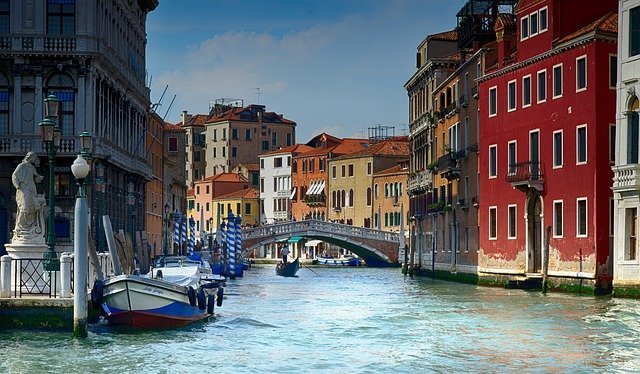
Our school in Venice sits in a stunning historical building with a terrace overlooking a traditional square—the perfect spot to contemplate the works of Titian, Tintoretto, and Veronese.
The Venetian art history program includes guided tours that take you through St. Mark’s Basilica and the Doge’s Palace, allowing you to see how the “Serenissima” used art to project its wealth and mystery to the rest of the world.
The Eternal City: Art History Courses in Rome
While Florence is the cradle of the Renaissance, Rome is the stage where Italian art history reached its most dramatic heights. We are thrilled to now offer courses in the “Eternal City,” where the classical past and the Baroque future collide.
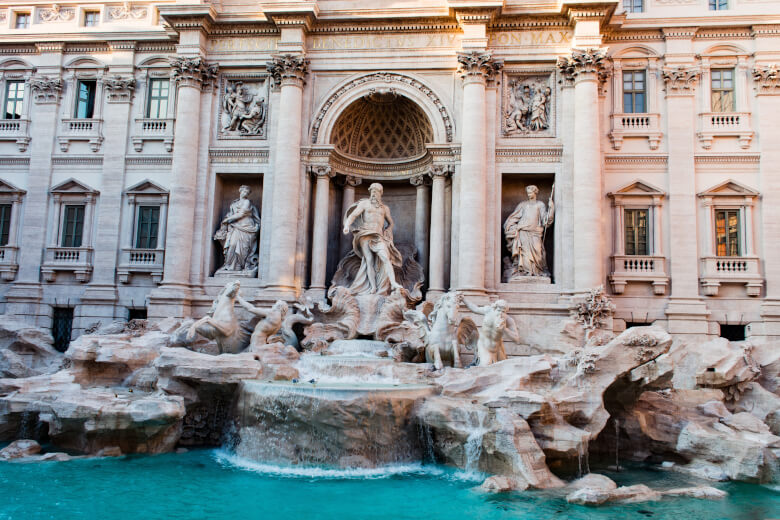
In Rome, your education spans from the ruins of the Roman Forum to the theatrical masterpieces of Bernini and Caravaggio. This is where the High Renaissance reached its peak and later gave way to the Baroque, fueled by the immense power and patronage of the Papacy. It is a city of scale, where every fountain and facade tells a story of ambition and divinity.
With our History of Art Courses in Rome you can choose to study different periods, including Roman Antiquity, Medieval Rome, the Renaissance or the Baroque periods.
Explore our structured Art History Courses in Italy.
Frequently Asked Questions – History of Art Courses in Italy
How long are art history courses in Florence?
Most courses last 1 week (10 one-to-one lessons), with options to extend. This format is perfect for travelers who want a deep dive without a semester-long commitment.
Can I combine art history with Italian language lessons?
Absolutely—many students combine both for deeper cultural immersion. Learning the language of the artists often provides new insights into their work. Explore our Italian language courses here.
What kind of accommodation is available?
We offer various options near our schools in the historic centers, including private rooms, shared or individual flats, and hotels.
Are the lessons held inside museums?
Yes! Art history courses with Studiainitalia take place directly in the streets, museums, and churches—rather than traditional classrooms—with guided visits to specific artworks and historical sites.
What are the best cities to study history of art in Italy?
Florence, Rome, and Venice are among the top choices. Florence is ideal for the Renaissance, Rome offers a broader timeline from antiquity to the Baroque, and Venice stands out for its unique artistic tradition shaped by light, color, and international influences.
Cover image by Rodney Castillo from Pixabay