
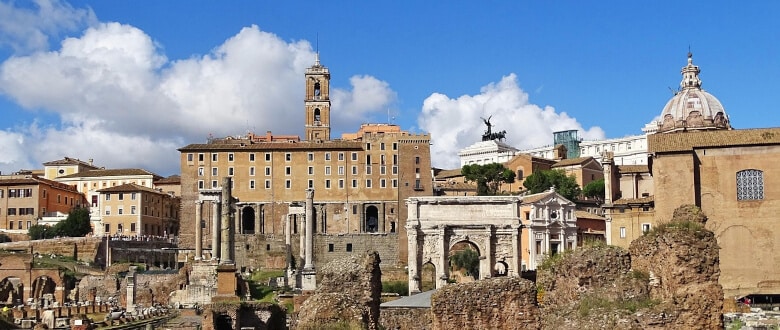
Rome has a way of keeping you curious. There’s always another neighbourhood to explore, a local expression you haven’t heard before, or a small discovery waiting around the corner. And when you’re studying Italian in Rome, even the simplest everyday experiences become opportunities to practise the language.
From Roman expressions to local food, art and lesser-known places, here are six ways to make the most of your time in Rome beyond the classroom.
This article was first published in 2021 and was updated in 2026.
1. Pick up a few Roman expressions
Standard Italian works fine in Rome, but you’ll inevitably run into Romanesco, the local dialect. You don’t need to speak it fluently, but picking up a few key terms helps you follow what’s happening around you.
Take caciara, which means noise or chaos. Someone who is loud, rowdy, or constantly creating a scene is called a caciarone—usually said with a blend of annoyance and fond amusement.
During the colder months, you’ll also hear people complain about la gianna, a sharp, icy wind blowing through the alleys (“Che gianna!” is essentially “What a freezing wind!”).
Classroom Italian covers the mechanics, but learning dialect words gives you a feel for how Romans usually communicate.
2. Find a quiet place to study: Villa Torlonia
Rome can be overwhelming at times. When you need a quiet spot to decompress, head to Villa Torlonia.
The park began as a rural estate and was transformed in the late eighteenth century for the Torlonia family, with Giuseppe Valadier commissioned to make the buildings and gardens more monumental. Today it’s a peaceful green space on Via Nomentana, with tree-lined paths, museums and plenty of benches.
Don’t miss the Casina delle Civette, a curious villa known for its stained glass and owl-themed decorations. It was originally designed by Giuseppe Jappelli and later transformed in the early twentieth century.
It’s a great spot to bring your notes and go over your vocabulary. Studying outside the classroom often feels a lot less tedious.
3. Try artichokes two ways
Food offers a direct line into Roman culture, and artichokes are a classic example. When in season, you’ll find them served across the city in two distinct styles:
- Carciofi alla romana are braised whole with garlic, wild mint and olive oil until soft, tender and fragrant. You’ll find them in traditional trattorias throughout Rome.
- Carciofi alla giudia take the opposite approach: the artichokes are fried twice until the outer leaves turn crisp and golden. This Jewish-Roman specialty is closely linked to the city’s historic Jewish Ghetto, where many restaurants serve it.
Try both if you get the chance. Alla romana is tender and herb-infused, while alla giudia is crispy and savory. A far better way to learn about local cuisine than reading a menu description.

4. Visit Palazzo Doria Pamphilj
Tucked along the bustling Via del Corso, Palazzo Doria Pamphilj is easy to miss if you’re rushing by. Inside, however, lies one of Rome’s finest private art collections, built up over centuries by the Doria, Pamphilj, Landi and Aldobrandini families.
The collection includes works by Caravaggio, Raphael, Titian, Velázquez and many others, alongside sculptures, furniture and grand decorated rooms.
It also works well as a language activity. Choose an artwork, read its description in Italian where available, and try describing what you see using your own words. You can also look up unfamiliar art-related vocabulary during your visit.
5. Walk or cycle when you can
Rome’s traffic has a reputation for a reason. Public transport is extensive, but buses and metro connections don’t always make moving around the historic centre straightforward.
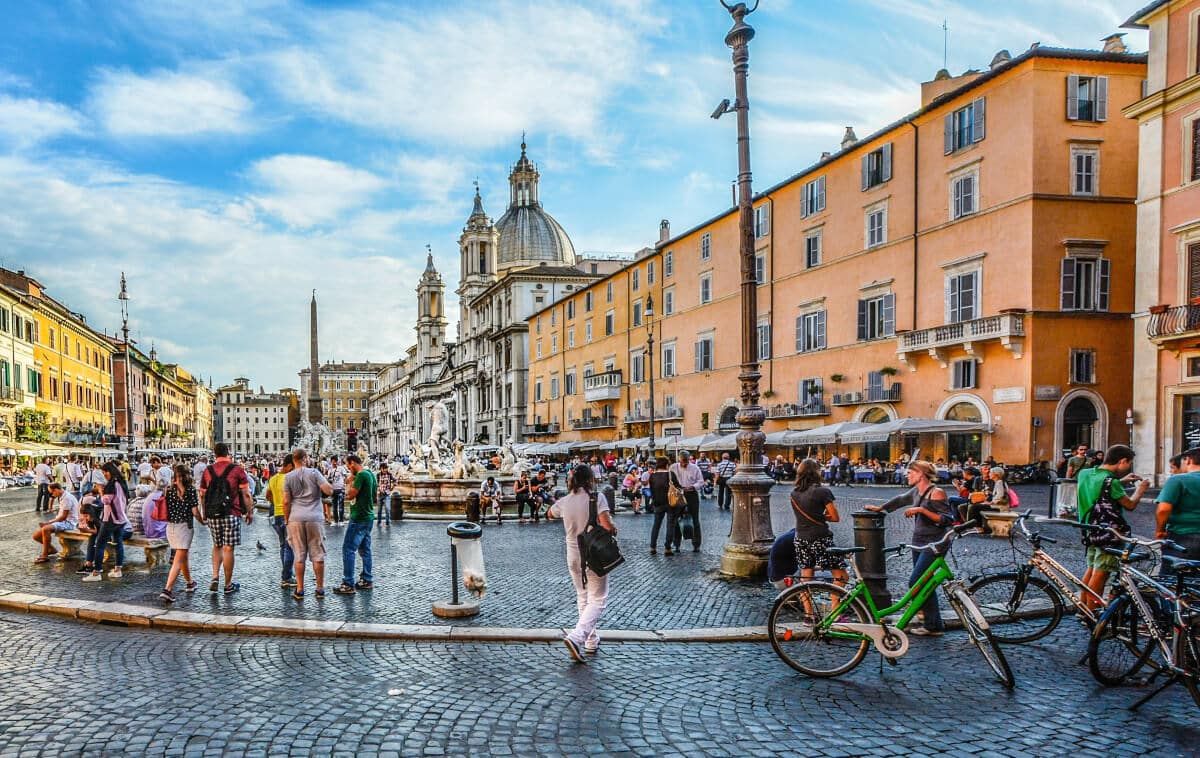
Walking is almost always your best bet. The centro storico is fairly dense, and exploring on foot lets you stumble upon hidden courtyards, quiet side streets, and neighborhood markets you’d miss from a bus window.
Cycling is another option, particularly along designated routes and in parks such as Villa Borghese. However, Rome’s cycling network is still developing, and busy traffic and cobbled streets can make some routes challenging. If you’re unfamiliar with the city, choose quieter routes and plan your journey in advance.
A simple routine works well: Italian class in the morning, then an afternoon on foot with one neighbourhood, market or museum as your destination. You’ll get more Italian practice, more exercise, and a much better feel for the city.
6. Stay for at least two weeks
Rome can feel a bit overwhelming at first: the traffic, the history, the crowds, the sheer number of things to see. But as you settle into your routine, the city starts to feel more familiar. You find your favourite café, get to know your neighbourhood, and begin noticing the smaller details of everyday life.
For that reason, we recommend booking an Italian course in Rome for at least two weeks. It gives you time to settle in, build confidence speaking, and get beyond the first round of major sights.
Start your Italian course in Rome
An Italian course in Rome gives you grammar, vocabulary and structured lessons. Leaving the classroom is where you apply it: ordering breakfast, reading daily menus, asking for directions, and finding a daily routine that turns textbook exercises into real-world fluency.
Whether you’re a complete beginner or looking to refine your skills, studying in Rome lets you live the language rather than just study it.
Ready to plan your stay? Explore our courses in Rome and find a programme that fits your schedule.
If you have already studied Italian in Rome: did we miss any tips in your opinion? Comment below!
Recommended websites for more tips on Rome:
- Le Coliche – a satirical channel on Youtube.
- Pendolare Disagiato – an Instagram account on public transport malfunctions.
- A Day in Rome – great tips of all sorts about Caput Mundi.
- Instagramers Roma – amazing photos of an amazing city.
Curiosity:
Did you know that Rome is the home city of Måneskin, the Italian rock band that has just won the Eurovision Song Contest 2021?
Buon Italiano a tutti!
Cover image by neufal54 on Pixabay