
Venice is famous for its tourist spots, but the best place to practice Italian is in the quiet neighborhoods where locals actually live. Getting away from the crowds helps you pick up the language in everyday situations.
Here are five interesting places that will inspire your studies, help you start conversations, and make learning Italian in Venice more enjoyable.
1. Libreria Acqua Alta: where books live in bathtubs
Run by the eccentric Luigi Frizzo, this independent bookstore feels like stepping into a storybook. Hundreds of volumes are chaotically stacked in old gondolas, canoes, and vintage bathtubs, while a staircase made of colorful paperbacks leads you deeper into the shelves.
Cats roam freely, acting as unofficial librarians, and the air carries the comforting scent of aged paper. Located near the Chiesa di Santa Maria Formosa, it’s a quiet place perfect for reading Italian novels and practicing vocabulary.
Pro tip: Visit on a weekday morning, when the bookstore is usually less crowded and you’ll have more time to browse the shelves, read a few pages in Italian, and practise some vocabulary.

2. Venice ghost walking tour: discover the city after dark
A 1.5-hour ghost walking tour takes you through shadowed squares, narrow alleyways, and forgotten courtyards while a local guide shares centuries of legends, true crime, and folklore.
You’ll hear about Biasio, the infamous butcher of Venice, and peek at the spiraling Bovolo staircase. Beyond the thrill, this tour is a fun activity for language learners.
Listening to a native speaker narrate historical events in Italian helps improve your listening skills, introduces colloquial expressions, and gives you gives you something to talk about later with classmates or locals.
Student tip: Ask your guide to slow down or repeat key phrases. Jot down three new words you hear and use them in a short message to a classmate the next day.
3. Forte Sant’Andrea: island silence and lagoon views
While Murano and Burano draw the crowds, Isola di Sant’Andrea is much quieter. The 17th-century fort, designed by architect Michele Sanmicheli, sits right on the edge of the lagoon.
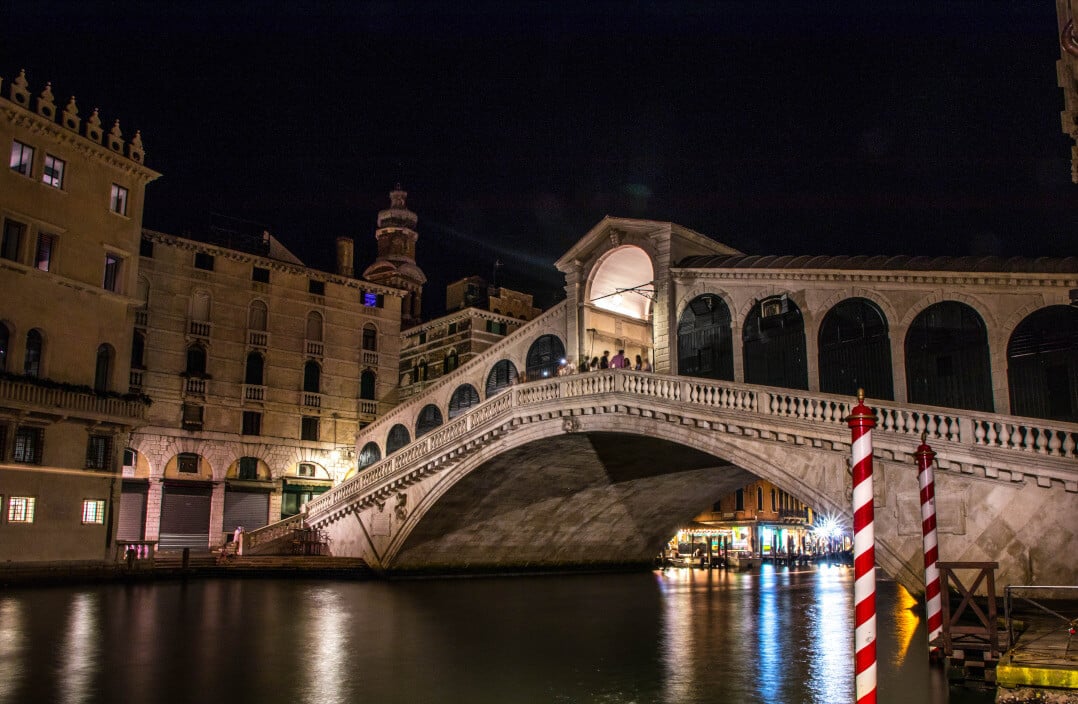
The ruins are scruffy, the paths are unpaved, and the atmosphere is deeply peaceful. From the top, you can enjoy uninterrupted views of Venice’s skyline and the water stretching to the horizon.
It’s a peaceful spot to sit with a notebook, review your notes, and learn new phrases without any pressure.
Getting there: Take the ACTV water bus (vaporetto) toward the eastern lagoon; check the current schedule on the official ACTV site or app.

4. Chioggia: a different side of the Venetian lagoon
Known locally as “Venezia in piccolo,” Chioggia is a fishing town just south of Venice that feels like stepping into a slower version of the city.
Arched bridges cross narrow canals, fishermen mend nets at dawn, and you’re more likely to hear everyday Italian than conversations aimed at tourists. There’s less grand art here, but there’s more life.
It’s the perfect day trip when Venice feels overwhelming, and a great place to practice. Order seafood at a family-run trattoria, ask directions in Italian, and watch how locals speak and interact.
Day-trip basics: Regional buses connect Venice to Chioggia in about an hour.

5. Malefatte Boutique: shopping with a purpose
Run by the non-profit cooperative Rio Tera dei Pensieri, this boutique sells handmade goods crafted by prisoners from facilities across the Veneto region. “Malefatte” translates to “misdeeds”.
They sell handmade t-shirts, leather notebooks, and woven bags, with each item made by someone learning a new trade. Shopping here supports a good cause, and it gives you an easy way to start a conversation in Italian.
Artisans and staff are often happy to explain their process in Italian, giving you a natural opportunity to practice asking questions, describing materials, and learning regional vocabulary.
Language practice idea: Ask “Come è fatto?” (How is it made?) or “Qual è la storia di questo oggetto?” (What’s the story behind this item?). These simple questions can start a conversation.

Learn Italian While Living in Venice
Exploring Venice gives you plenty of opportunities to hear and use Italian in everyday situations. But if you want to make real progress, combining these experiences with regular lessons can make a big difference.
At Studiainitalia, we work with accredited language schools in Venice offering Italian courses for different levels and lengths of stay. You can study in class and then practise what you’ve learned as you explore the city, visit a café, go shopping or simply chat with people you meet along the way.
Courses typically start from around €320 per week, and we can help arrange comfortable, carefully selected housing close to your school—including shared rooms, studios, or homestays with Italian families for extra conversation practice.
Explore flexible course options, accommodation packages, and seasonal start dates to choose the course that suits your stay: find your Italian course in Venice.
Frequently Asked Questions about Italian Courses in Venice
Is Venice a good city for learning Italian?
Yes. Beyond the classrooms, Venice offers daily opportunities to practice listening and speaking in everyday situations: markets, cafés, public transport, and cultural events. The city’s compact size also makes it easy to walk everywhere.
How can I practice Italian outside the classroom in Venice?
Visit local bakeries and ask for recommendations, join neighborhood walking tours, read menus and street signs aloud, and strike up conversations with shop owners. Even simple exchanges like “Buongiorno, quanto costa?” or “Mi consiglia qualcosa di tipico?” help you become more confident using what you’ve learned in class.
What’s the best way to combine tourism and language study in Venice?
Choose a course that offers morning classes with afternoon free time, allowing you to explore neighborhoods, attend local events, or take day trips to places like Chioggia. Many schools also organize cultural workshops, cooking classes, and museum visits in Italian.
Can I learn Italian in Venice if I’m a complete beginner?
Absolutely. Venice’s language schools welcome all levels, and beginner programs focus on practical communication, pronunciation, and everyday vocabulary. You’ll also have plenty of chances to hear and use Italian outside class.
Cover image by albertosandrin on Pixabay